Original: $136.39
-65%$136.39
$47.74The Story
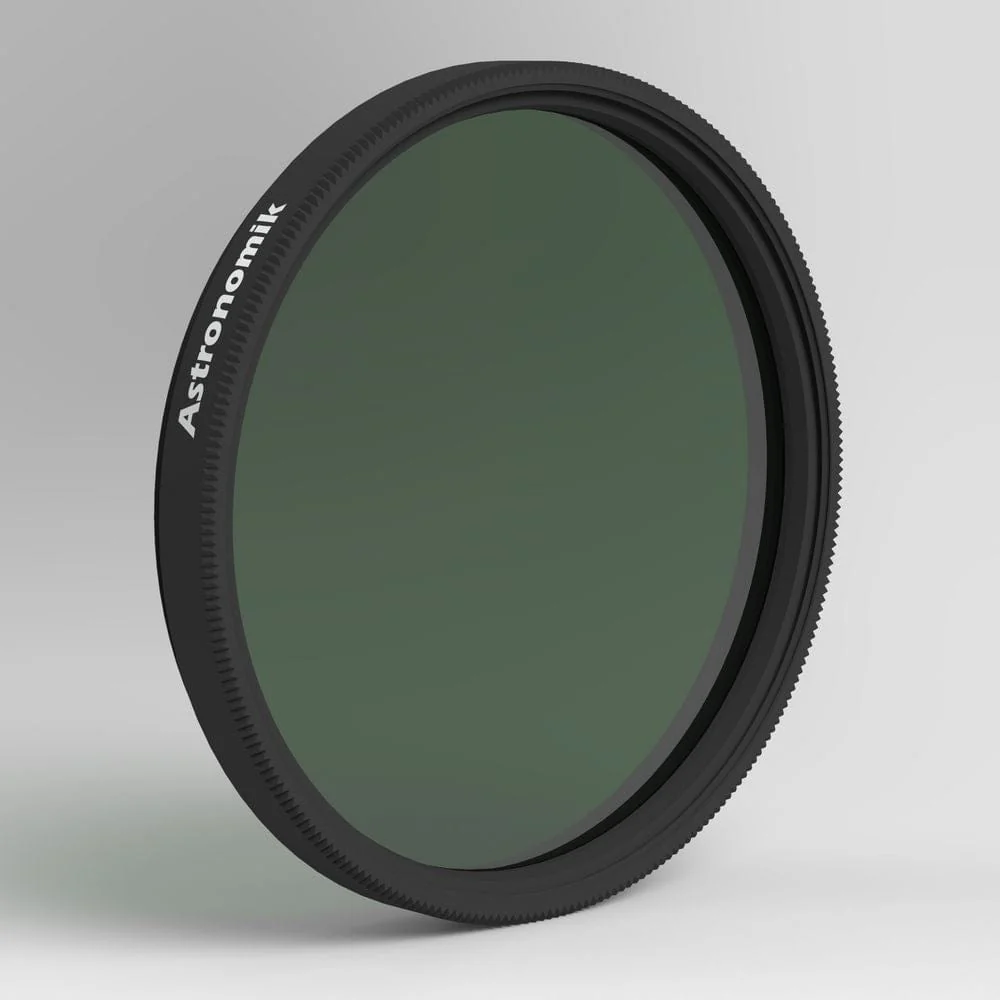
The OIII-CCD Filter is suitable for imaging of OIII nebulae from observation sites with light pollution and from dark sites as well. The contrast between an object glowing at 501nm and the background is increased enormously!
Due to the combination of the narrow bandwidth of 6nm and the high transmission of typically 96% the filter gives you an enormous contrast boost, as all unwanted light from other wavelengths than <xx> is blocked form UV up to the IR. This results in an extremely dark background.
The FWHM of 6nm is matched to give you optimal performance with CCD and CMOS sensors with a very low dark current! The 6nm filter is the best choice if you are observing from a heavily light polluted site or if you are imaging faint objects in star-crowded regions of the Milky Way.
Due to the new MFR coating technique you may use one single filter on all instruments up to f/4 without a significant reduction in performance.
The Astronomik H-alpha filter MUST NOT BE USED for solar observation!
Technical data of the filter:
- Guaranteed Transmission of more than 90% at the OIII Line (501 nm)
- Typical Transmission of 95% at the OIII Line (501 nm)
- Full-Width-Half Maximum (FWHM): 6nm
- perfect blocking of unwanted light from UV up to the IR
- Par focal with all Astronomik filters
- MFR Coating technique: Usable with all optics up to f/4
- Thickness of 1mm
- Not sensitive to moisture, scratch resistant, not aging
- optically polished substrate, striae-free and free of residual stresses
- High quality storage box
Imaging with Narrowband-Emission line Filters
If you have to observe from light polluted sites (like most of us...), imaging with Narrowband-Emission line filters is the best way to take great images, as all kind of light pollution can be blocked very effective! Normally an H-alpha filter should be your first step into this amazing field of astrophotography! With an Narrowband H-alpha filter you will be able to take deep and high contrast images even with very heavy light pollution or with the full moon high up in the sky!
If you look at other astro photos, an H-alpha is the best choice for all nebulae glowing red! An OIII filters expands your imaging possibilities, as you are able to image all greenish/blueish structures. Planetary nebulae and star forming regions are great targets! The SII filters completes your HSO-set of filters. With these three filters you are able to process your images like the ones from the Hubble space telescope!
The h-beta filter is not available in a 6nm version, as this filter has nearly no meaningful application. To illustrate this, there are two images shown below: Both were taken with a unmodified Canon 650D. Even as the camera has a sensitivity of less than 10% at H-alpha, there is some signal and structure in the h-alpha image, while you cannot see anything on the image taken with an H-beta filter!
Operation of the filter:
The filter blocks all unwanted light from artificial light-pollution, natural airglow and moonlight. Especially light from High- and Low-Pressure Sodium and mercury lights and all lines of natural airglow are 100% blocked. The filter increases the contrast between the sky-background and objects glowing at the OIII line at 501nm.
Tips and Hints for more applications:
Using the OIII-CCD filter together with H-alpha-CCD and SII-CCD filters you make produce false-color emission line images (HSO) in the same way as the Hubble-Space telescope. This is possible even from heavily light polluted sites!
Alternatives:
The lower priced 12nm filters are the right choice for you, if you own a typical DSLR or a CCD camera with a high dark current! The 12nm filters should be the fist choice for cameras with an integrated guiding sensor, as you will have about twice as much stars compared to the 6nm filter.
Sizes Available From Astronomik - Please ask us if we don't have a price listed for the one you would like
1,25" (M28.5)
2" (M48)
T-thread cell (M42x0.75)
Ø27mm
Ø31mm
Ø36mm
Ø42mm
Ø50mm
50x50mm
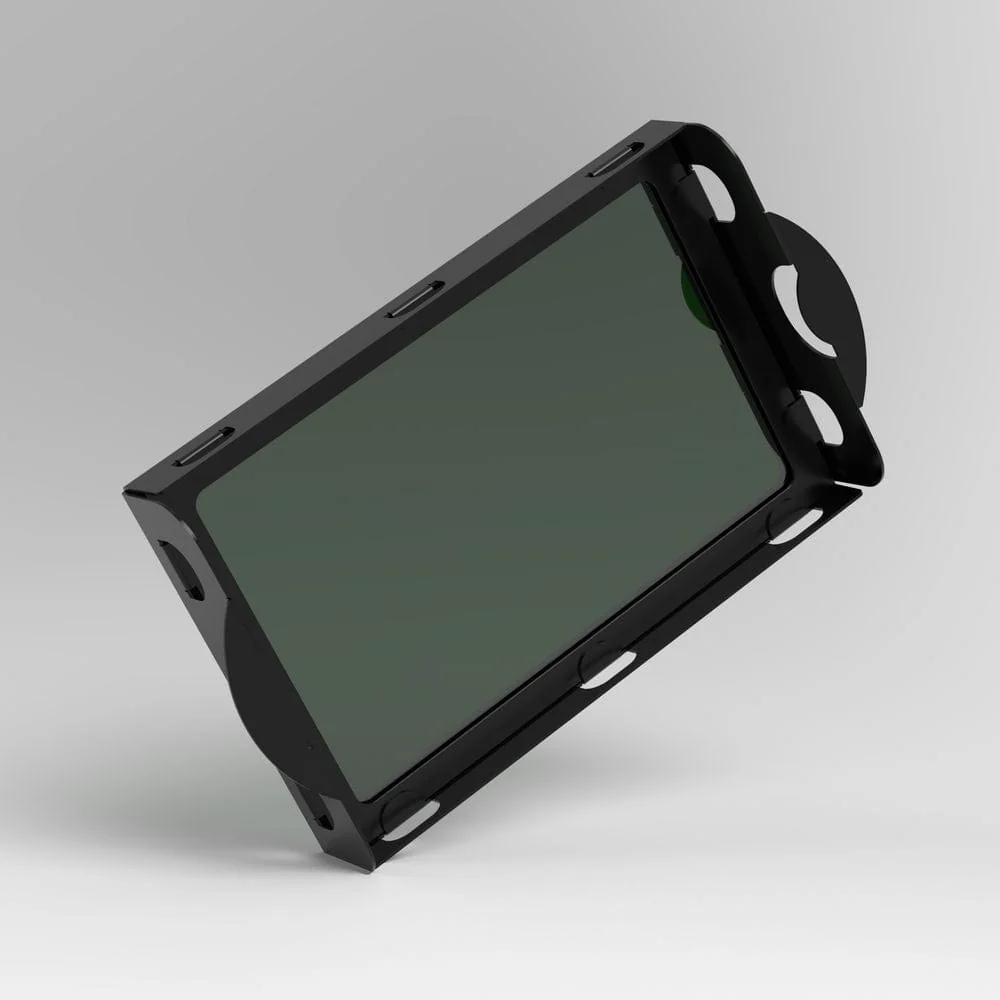
EOS APS-C Clip-Filter
EOS XL Clip-Filter
M52

Details & Craftsmanship
Every detail has been carefully considered to bring you the perfect product.

Details & Craftsmanship
Every detail has been carefully considered to bring you the perfect product.
Details & Craftsmanship
Every detail has been carefully considered to bring you the perfect product.
Details & Craftsmanship
Every detail has been carefully considered to bring you the perfect product.
Details & Craftsmanship
Every detail has been carefully considered to bring you the perfect product.
Description
The OIII-CCD Filter is suitable for imaging of OIII nebulae from observation sites with light pollution and from dark sites as well. The contrast between an object glowing at 501nm and the background is increased enormously!
Due to the combination of the narrow bandwidth of 6nm and the high transmission of typically 96% the filter gives you an enormous contrast boost, as all unwanted light from other wavelengths than <xx> is blocked form UV up to the IR. This results in an extremely dark background.
The FWHM of 6nm is matched to give you optimal performance with CCD and CMOS sensors with a very low dark current! The 6nm filter is the best choice if you are observing from a heavily light polluted site or if you are imaging faint objects in star-crowded regions of the Milky Way.
Due to the new MFR coating technique you may use one single filter on all instruments up to f/4 without a significant reduction in performance.
The Astronomik H-alpha filter MUST NOT BE USED for solar observation!
Technical data of the filter:
- Guaranteed Transmission of more than 90% at the OIII Line (501 nm)
- Typical Transmission of 95% at the OIII Line (501 nm)
- Full-Width-Half Maximum (FWHM): 6nm
- perfect blocking of unwanted light from UV up to the IR
- Par focal with all Astronomik filters
- MFR Coating technique: Usable with all optics up to f/4
- Thickness of 1mm
- Not sensitive to moisture, scratch resistant, not aging
- optically polished substrate, striae-free and free of residual stresses
- High quality storage box
Imaging with Narrowband-Emission line Filters
If you have to observe from light polluted sites (like most of us...), imaging with Narrowband-Emission line filters is the best way to take great images, as all kind of light pollution can be blocked very effective! Normally an H-alpha filter should be your first step into this amazing field of astrophotography! With an Narrowband H-alpha filter you will be able to take deep and high contrast images even with very heavy light pollution or with the full moon high up in the sky!
If you look at other astro photos, an H-alpha is the best choice for all nebulae glowing red! An OIII filters expands your imaging possibilities, as you are able to image all greenish/blueish structures. Planetary nebulae and star forming regions are great targets! The SII filters completes your HSO-set of filters. With these three filters you are able to process your images like the ones from the Hubble space telescope!
The h-beta filter is not available in a 6nm version, as this filter has nearly no meaningful application. To illustrate this, there are two images shown below: Both were taken with a unmodified Canon 650D. Even as the camera has a sensitivity of less than 10% at H-alpha, there is some signal and structure in the h-alpha image, while you cannot see anything on the image taken with an H-beta filter!
Operation of the filter:
The filter blocks all unwanted light from artificial light-pollution, natural airglow and moonlight. Especially light from High- and Low-Pressure Sodium and mercury lights and all lines of natural airglow are 100% blocked. The filter increases the contrast between the sky-background and objects glowing at the OIII line at 501nm.
Tips and Hints for more applications:
Using the OIII-CCD filter together with H-alpha-CCD and SII-CCD filters you make produce false-color emission line images (HSO) in the same way as the Hubble-Space telescope. This is possible even from heavily light polluted sites!
Alternatives:
The lower priced 12nm filters are the right choice for you, if you own a typical DSLR or a CCD camera with a high dark current! The 12nm filters should be the fist choice for cameras with an integrated guiding sensor, as you will have about twice as much stars compared to the 6nm filter.
Sizes Available From Astronomik - Please ask us if we don't have a price listed for the one you would like
1,25" (M28.5)
2" (M48)
T-thread cell (M42x0.75)
Ø27mm
Ø31mm
Ø36mm
Ø42mm
Ø50mm
50x50mm
EOS APS-C Clip-Filter
EOS XL Clip-Filter
M52


